.png)
The Future of Workplace Health & Safety Inspections: Why Safety Teams Are Turning to AI-Driven Platforms
Updated: Apr 23

Across Canada, workplace safety professionals are facing a growing challenge. Health and safety responsibilities have expanded dramatically.
Organizations must now manage:
Workplace hazard inspections
Incident reporting
Emergency preparedness planning
Compliance documentation
Safety training records
Risk assessments
Regulatory reporting
And they must do it while protecting workers, maintaining productivity, and demonstrating compliance with evolving safety regulations. For many safety teams, the traditional tools used to manage these responsibilities are no longer keeping up.
Paper inspection forms.
Disconnected spreadsheets.
Manual reporting processes.
These systems create administrative burden and limit the ability of safety leaders to see risks developing in real time. As workplaces become more complex, many organizations are turning to AI-driven digital inspection platforms to modernize their safety programs.
The Hidden Administrative Burden Facing Health & Safety Teams
Most safety professionals entered the field to protect people. But in many organizations, a large portion of their time is spent managing paperwork rather than managing risk.
Typical administrative tasks include:
Compiling inspection records
Tracking corrective actions
Preparing safety reports
Maintaining compliance documentation
Responding to audits or regulatory requests
When inspections are tracked manually, safety teams often spend hours each week gathering data and producing reports. The problem is not the inspections themselves. The problem is how the data is captured, stored, and analyzed. Without a centralized system, safety information becomes fragmented and difficult to interpret.
Why Safety Inspections Are the Foundation of Workplace Risk Management
Inspections are one of the most powerful tools available to workplace safety teams.
They help identify hazards before incidents occur. They provide documentation that safety protocols are being followed, and they demonstrate due diligence when organizations must prove they have taken reasonable steps to protect workers.
Across many industries, inspection schedules may include:
Hourly operational checks
Daily safety inspections
Weekly hazard reviews
Monthly compliance inspections
Annual regulatory assessments
Managing these inspection schedules across large organizations can quickly become overwhelming without the right systems in place.
The Problem With Paper-Based Safety Inspections
Despite advances in technology, many organizations still rely on paper inspection forms.
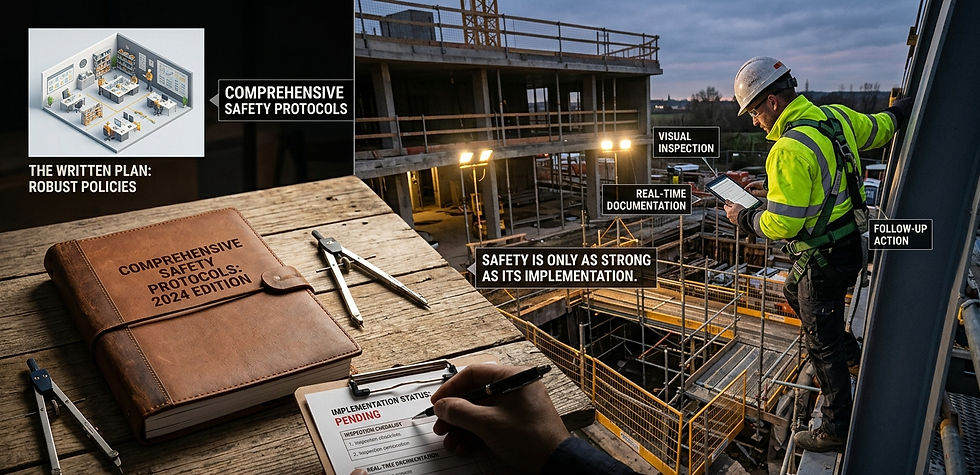
At first glance, paper systems appear simple, but they introduce several operational challenges. Inspection records can be misplaced or incomplete. Supervisors may not know whether inspections were completed. Corrective actions can be delayed. And compiling safety reports can take hours or days.
Perhaps most importantly, paper systems do not provide safety leaders with real-time visibility into developing risks. That lack of visibility limits the ability to intervene before incidents occur.
How Digital Safety Inspection Platforms Are Transforming Workplace Safety
Digital inspection platforms address these challenges by centralizing safety inspections, incident reporting, and compliance documentation into a single system.
Instead of scattered records, organizations gain a structured safety management environment that allows teams to:
Track inspections in real time
Document hazards with photos and evidence
Automatically assign corrective actions
Generate safety reports instantly
Maintain complete compliance records
Safe Buildings enables organizations to centralize inspections in a digital system with automated reminders, escalation workflows, and documented verification of safety tasks. This transforms inspections from administrative paperwork into actionable safety intelligence.
AI-Driven Safety Analytics: A New Era for EHS Teams
One of the most significant developments in workplace safety technology is the use of artificial intelligence to analyze inspection data. AI-powered workplace safety inspections go beyond traditional systems that focus only on record keeping. Instead, AI-driven platforms focus on delivering actionable insights that improve safety outcomes and compliance.
Safe Buildings includes an AI analyst called Kera, which analyzes inspection and compliance data to provide on-demand insights into safety performance and risk exposure. Through AI-driven workplace safety inspections, organizations can better identify hazards, monitor trends, and make faster, data-informed decisions to enhance overall workplace safety.
This capability allows safety leaders to quickly identify patterns such as:
Recurring hazards in specific work areas
Departments with higher risk exposure
Compliance gaps in inspection schedules
Operational trends affecting safety performance
Instead of simply documenting safety activity, organizations gain the ability to predict and prevent risks.
Instant Safety Reporting for Leadership and Regulators
Health and safety teams are frequently asked to provide documentation for internal leadership, regulatory agencies, and insurance providers.
These reports often include:
Inspection records
Incident investigations
Corrective action documentation
Safety performance metrics
Preparing these reports manually can require significant time and administrative effort. Digital safety platforms allow teams to generate comprehensive safety reports in
seconds, providing immediate visibility into safety performance across entire organizations. This allows safety professionals to focus on prevention rather than paperwork.
Emergency Preparedness and Workplace Safety
Health and safety teams also play a critical role in emergency preparedness.
Organizations must maintain accessible documentation related to:
Emergency response procedures
Building safety plans
Emergency contact lists
Critical infrastructure locations
Hazardous materials information
During an emergency, access to this information can significantly affect response effectiveness. Digital safety platforms provide instant access to emergency response information from any device, improving coordination between workplace teams and first responders. For large organizations and complex facilities, this level of accessibility is essential.
Supporting Safety Professionals in the Work They Do Every Day
Technology should empower safety professionals, not create additional complexity.
Modern safety platforms are designed to simplify the daily work of safety teams by providing:
Centralized safety documentation
Automated inspection scheduling
Real-time hazard reporting
AI-driven safety insights
Instant compliance reporting
The goal is simple. Give safety professionals the tools they need to identify risks earlier, respond faster, and maintain stronger compliance programs.
Affordable Technology That Delivers Immediate Impact
Many organizations assume that advanced safety technology requires complex implementation and large budgets.
Today’s cloud platforms are designed to be both affordable and easy to deploy.
Systems can often be operational within 24 hours, allowing organizations to transition from manual inspection processes to digital safety management quickly.
In many cases, the monthly cost is less than a typical cellphone plan, making the technology accessible for organizations of all sizes. The return on investment is clear.
Reduced administrative workload.
Improved safety visibility.
Stronger compliance documentation.
Better risk management.
The Future of Workplace Safety Is Data-Driven
The role of the safety professional is evolving.
Today’s safety leaders are expected to provide strategic insight into organizational risk. To do that effectively, they need access to reliable data.
Digital safety platforms transform traditional inspection processes into real-time operational intelligence. Safe Buildings enables organizations to move from paper-based inspections to verifiable, data-driven safety programs, strengthening compliance and improving workplace safety culture.
Discover How Safe Buildings Supports Workplace Safety Teams
Organizations across multiple industries are adopting digital safety platforms to modernize their health and safety programs.
Learn how the platform works:
And see how your organization can transition from manual inspection processes to AI-powered safety intelligence in less than 24 hours.


Comments