.png)
The Compliance Challenge in Commercial Office Buildings, Why Property Managers Are Turning to AI-Driven Inspection Platforms

Updated: Apr 23

Commercial office towers are some of the most complex environments in the built environment. Hundreds sometimes thousands of occupants enter and leave every day.
Tenants operate businesses with their own risks and operational demands. Building systems run continuously and emergency preparedness must account for multiple organizations sharing the same infrastructure.
For property managers and commercial real estate operators in Toronto, this creates an operational reality that few people outside the industry fully appreciate. Behind every office tower is a continuous cycle of inspections, safety checks, compliance requirements, and emergency readiness tasks, and the stakes are high.
The Operational Reality of Managing a Multi-Tenant Office Building
Commercial real estate teams are responsible for far more than maintaining the physical building. They are responsible for protecting the people and businesses operating inside it. That means ensuring critical building systems are functioning properly every hour of every day.
Typical operational responsibilities include:
Security inspections
Daily building safety checks
Weekly operational inspections
Monthly fire protection verifications
Annual life safety system testing
Emergency preparedness documentation
Each inspection contributes to a broader goal:
Protecting tenants, employees, visitors, and business operations. But managing these tasks across large buildings or across entire portfolios can quickly become overwhelming when systems rely on paper checklists, spreadsheets, or disconnected software.
The Risk of Manual Inspection Systems in Commercial Real Estate
Many commercial property teams still rely on traditional inspection methods.
Paper inspection logs
Manual sign-off sheets
Email reports
Fragmented spreadsheets
While these systems may appear manageable, they introduce significant operational risk.
Key challenges include:
Missed inspections due to staffing or scheduling issues
Limited visibility across large properties or portfolios
Delays in identifying safety hazards
Difficulty proving compliance during audits
Hours spent compiling reports for owners and regulators
In commercial real estate, where buildings host thousands of employees and major corporate tenants, these gaps create exposure that no asset manager wants to carry.
When Corporate Tenants Expect Proof of Safety
Today’s tenants expect more from their buildings. Companies leasing office space increasingly evaluate building safety, operational resilience, and emergency preparedness before committing to long-term leases.
They want assurance that the building operator has systems in place to manage:
Fire safety compliance
Emergency response coordination
Incident documentation
Security operations
Health and safety inspections
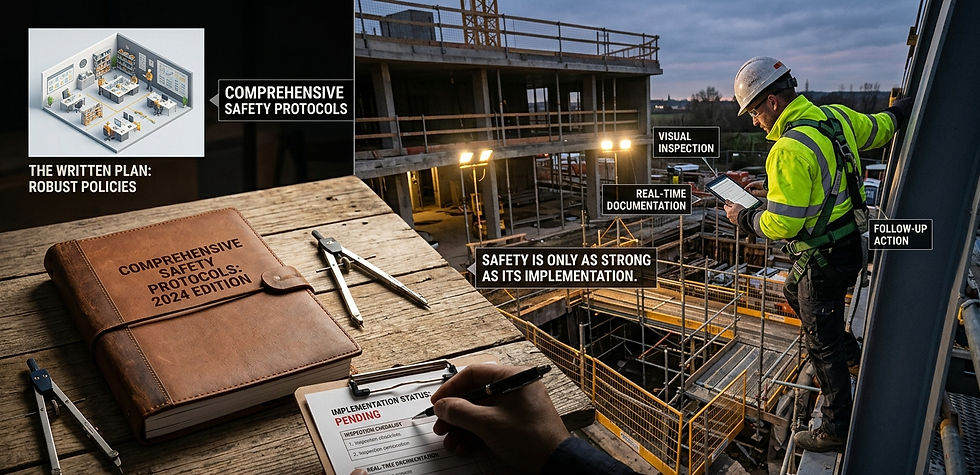
For landlords and property managers, this means demonstrating not just that inspections occur, but that they are documented, verifiable, and measurable. That level of transparency is difficult to achieve with manual systems.
Why Commercial Real Estate Is Moving Toward Digital Inspection Platforms
To address these challenges, many commercial real estate operators are transitioning to centralized digital platforms that manage building safety and compliance in one place.
These systems allow building teams to manage:
Inspection schedules
Safety documentation
Compliance verification Incident reporting
Emergency response information
Building operational data
Instead of scattered records across multiple systems, everything lives within a single digital platform. This shift transforms inspections from administrative tasks into structured operational intelligence.
AI-Driven Analytics: Turning Building Data Into Safety Intelligence
Recording inspection data is important. Understanding what that data reveals is even more valuable. Modern building safety platforms now incorporate artificial intelligence to analyze operational trends and identify emerging risks and automate data summaries.
Safe Buildings includes an AI-powered insights engine called Kera, which analyzes inspection and compliance data to provide actionable intelligence on building safety and risk management.
For commercial real estate operators, this capability can reveal patterns such as:
Recurring hazards in specific areas
Operational gaps in inspection coverage
Emerging safety risks
Compliance trends across multiple properties
Instead of reacting to incidents, building teams can proactively manage risk.
Reporting for Asset Managers and Owners in Seconds
Commercial real estate portfolios often include multiple buildings across cities or regions. Owners and asset managers need clear operational visibility into each property.
Traditionally, preparing those reports requires hours of administrative work and digital inspection platforms change that.
With Safe Buildings, property teams can generate portfolio-wide compliance and inspection reports in seconds, giving leadership immediate insight into building safety performance.
This level of transparency is invaluable for:
Investor reporting
Insurance documentation
Regulatory audits
Tenant assurance
Supporting Property Managers and Facility Teams
Commercial property management teams operate in a fast-moving environment.
Tenant issues arise daily. Maintenance demands never stop. Safety responsibilities remain constant. Technology should reduce operational complexity not add to it.
Modern safety platforms are designed to support building teams by providing:
Real-time inspection tracking
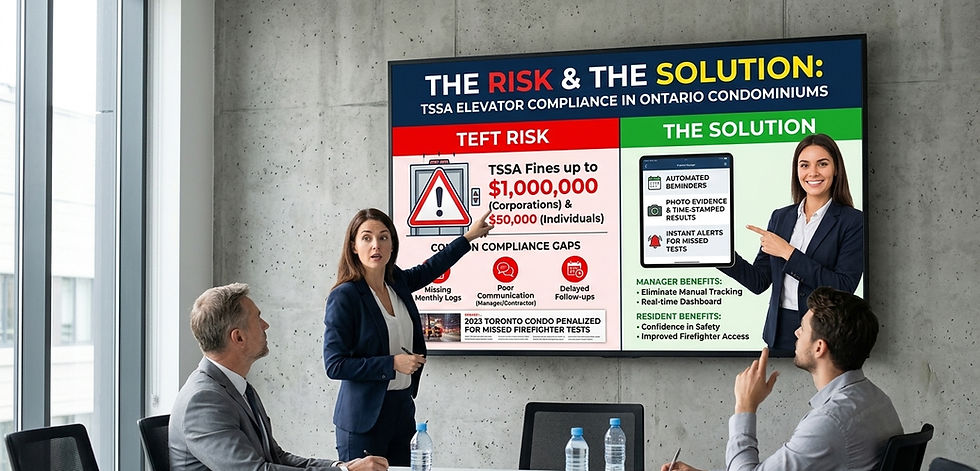
Automated compliance reminders
Instant documentation
Emergency response data
Operational analytics
The result is a smarter operational framework that allows teams to focus on what matters most: Keeping tenants safe and buildings running smoothly.
Instant Access to Critical Emergency Information
In an emergency, information must be available immediately.
First responders and building teams need access to critical data such as:
Emergency contacts
Building shut-off valves
Hazardous materials locations
Floor plans and drawings
Emergency procedures
Lists of occupants requiring assistance
Platforms like Safe Buildings provide instant access to this life-saving information from any device, helping improve response times and coordination during emergencies. For office towers with thousands of occupants, this capability can make a significant difference when seconds matter again, purpose built for your building’s team.
Affordable Technology for Modern Commercial Buildings
Historically, advanced building safety systems were expensive and complex to implement. That barrier has largely disappeared. Modern cloud platforms are designed to be affordable and easy to deploy. Some systems can be fully operational within 24 hours, allowing commercial buildings to transition from paper inspection logs to digital compliance systems almost immediately.
In many cases, the monthly cost is less than a typical cellphone plan, making the technology accessible to buildings of all sizes. For property managers, the value becomes clear quickly. Less time spent on administration. Better compliance tracking. Improved risk management.
From Inspection Logs to Operational Intelligence
Commercial real estate is evolving. Buildings are becoming smarter. Tenants expect higher standards of safety. Regulatory oversight continues to increase. Property managers must adapt to this new environment.
Safe Buildings enables building teams to move from paper records to verifiable proof of preparedness and protection, strengthening compliance and improving safety culture across entire portfolios.
Discover How SafeBuildings Supports Commercial Real Estate Teams
If you operate commercial office buildings or manage a real estate portfolio, modernizing your inspection and compliance systems can dramatically improve safety and operational efficiency.
Learn how the platform works at:
And discover how your building can transition from paper inspections to real-time safety intelligence in less than 24 hours.


Comments